
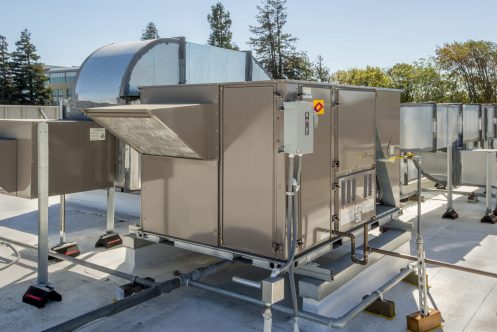
From offices and retail stores to restaurants and warehouses, rooftop HVAC systems are a common sight among the commercial facilities of San Antonio, TX. The primary reason for this placement is to put large, bulky equipment out of the way. This preserves valuable indoor and ground-level space for companies’ business operations.
Many of these rooftop units are packaged systems that combine heating, cooling, and ventilation components into a single, consolidated cabinet. This space-saving approach offers key advantages, such as keeping equipment away from high-traffic areas and centralizing major components for easier service access.
For San Antonio businesses, where reliable commercial cooling is essential to combat the intense regional heat, a properly designed and maintained HVAC system is critical. However, rooftop installation is not the right choice for every building. The final decision depends on factors like property design, the roof’s structural capacity, specific HVAC needs, and technicians’ access to the equipment for service.
What Is a Rooftop HVAC Unit and How Does It Work?
A packaged rooftop HVAC unit is an all-in-one climate control solution designed for commercial spaces. Unlike residential split systems, which have separate indoor and outdoor components, an RTU houses the compressor, condenser, evaporator coils, and ventilation fans within one durable cabinet. This self-contained design simplifies the installation process and consolidates the system’s footprint.
In simple terms, an RTU works by pulling in outdoor air and air from inside the building. It then cools or heats this air before a powerful blower motor distributes it throughout the property via a network of ductwork. The conditioned air enters different zones or rooms through vents. Meanwhile, stale indoor air goes back to the system through return ducts for filtering and reconditioning.
Rooftop equipment is versatile, and you can configure it to provide cooling, heating, ventilation, or any combination of these functions. This flexibility makes RTUs a popular choice for a wide range of commercial applications, from small storefronts to large industrial facilities.
Why Do Commercial Buildings Put HVAC Systems on the Roof?
Several practical benefits that are particularly important in a commercial setting drive the decision to place HVAC equipment on a rooftop. For most business owners and property managers, the main advantages are saving space, protecting equipment, reducing noise, and simplifying service access.
Preserving Valuable Indoor and Ground-Level Space
For any business, physical space is a valuable asset for employees, customers, inventory, and operations. Similarly, ground-level outdoor space is essential for parking, landscaping, deliveries, and customer access. Installing a large, noisy HVAC system on the ground would consume a significant portion of this prime real estate.
By placing bulky HVAC equipment on an otherwise unused roof, businesses can free up these areas for more productive uses. This modular, space-saving design allows for a more efficient property layout and maximizes the usable footprint of the commercial site. This is a significant advantage in competitive real estate markets.
Keeping HVAC Equipment Out of High-Traffic Areas
Ground-level areas around a commercial building are often busy. They see constant traffic from customer vehicles, delivery trucks, and employees. Landscaping and maintenance activities also occur regularly. Placing an HVAC system in these high-traffic zones exposes it to a greater risk of accidental damage from collisions or other activities.
Rooftop placement keeps the essential and expensive HVAC equipment safely out of the way. It also limits access by unauthorized individuals, reducing the risk of vandalism or tampering. Its elevated position protects the system from ground-level dirt, debris, and moisture, promoting better long-term performance and durability.
Reducing Indoor HVAC Noise
Commercial HVAC systems are powerful pieces of machinery. Their large compressors, motors, and fans inevitably produce significant noise and vibration during operation. If this equipment were located inside or directly adjacent to the building, the mechanical noise could easily disrupt the work environment for employees and create an unpleasant experience for customers.
Moving the system to the roof effectively isolates this operational noise from the occupied spaces below. This separation helps create the peaceful indoor atmosphere that offices, retail stores, healthcare facilities, and restaurants value.
Providing Centralized Access for HVAC Service
A packaged RTU consolidates all the major HVAC components into one location, making service and maintenance more efficient. When a technician arrives, they can access the entire system in a single, dedicated area rather than moving between indoor and outdoor units scattered across the property.
With proper rooftop access, our NATE-certified technicians can often perform inspections, diagnostics, and repairs without causing significant disruption to your daily business operations. Regular professional service is essential for commercial equipment. That’s why Rosenberg Plumbing & Air offers comprehensive commercial HVAC maintenance plans to keep your system running reliably and efficiently through every San Antonio season.
Are Rooftop HVAC Systems More Efficient?
Not necessarily. Placing an HVAC system on the roof does not automatically make it more energy efficient. A system’s energy performance depends on several factors. They include its efficiency ratings (SEER2 and EER2), whether it’s the right size for the building, the quality of the installation, and the condition of the ductwork.
However, modern packaged rooftop systems are designed with efficiency in mind. They provide centralized climate control that you can integrate with advanced thermostats and building automation systems. Many RTUs also support multiple zones, allowing a business to control temperatures in different areas independently.
Ongoing maintenance is the single most important factor in preserving a system’s efficiency over its lifespan. A sudden increase in energy consumption or noticeable decline in cooling or heating performance suggests that your system needs a professional tune-up or repair.
What Are the Challenges of Rooftop HVAC Equipment?
While rooftop systems offer many benefits, they also come with challenges. One of the biggest is direct exposure to the elements. In San Antonio, the equipment must endure intense sun and heat, heavy rain, strong winds, and airborne dirt and debris. This constant exposure can accelerate wear and tear unless you properly maintain the system.
The roof itself must be able to safely support the weight of the heavy equipment. You may need a structural engineer to confirm that the building can handle the load. Proper installation is also critical to prevent issues like water leaks. This includes ensuring correct drainage, weatherproofing all roof penetrations, and maintaining proper clearances for airflow and service access.
Finally, while centralized access is convenient, roof work requires strict safety procedures. Technicians must use proper safety gear and have training to navigate the unique environment. These challenges underscore the importance of regular preventive maintenance for commercial equipment that operates under demanding conditions.
When Does a Rooftop HVAC System Make Sense for a Commercial Property?
A rooftop HVAC unit is often the most appropriate choice when a commercial property has sufficient, structurally sound roof space and HVAC needs that a packaged system can meet. Professionals consider many factors when determining the best configuration for a building.
- Building size, layout, and age
- Primary use and occupancy levels
- Heating and cooling load calculations
- Existing or planned ductwork design
- Structural integrity of the roof
- Ease of access for installation and service
- Energy-efficiency goals and budget
- Potential needs for future expansion
The HVAC requirements for a restaurant differ greatly from those for a large office or retail warehouse. A thorough, professional assessment is the only way to determine if an RTU or another system type is the better fit. An expert can help you navigate the options and design a system that delivers reliable comfort and performance for your specific application.
Keep Your San Antonio Commercial HVAC System Performing Reliably
Rooftop HVAC systems are popular in commercial settings for good reason. They effectively conserve usable space, keep noisy mechanical equipment away from customers and employees, and centralize major components for service. This makes them a practical and efficient solution for many San Antonio businesses.
However, a successful outcome depends on careful evaluation of the building, high-quality installation, and commitment to ongoing professional maintenance. Our experienced team at Rosenberg Plumbing & Air is a trusted resource for commercial HVAC repair, maintenance, and replacement.
For expert commercial HVAC services in San Antonio, contact Rosenberg Plumbing & Air to discuss your property’s heating and cooling needs.
Tags: Commercial HVAC, HVAC Installation