
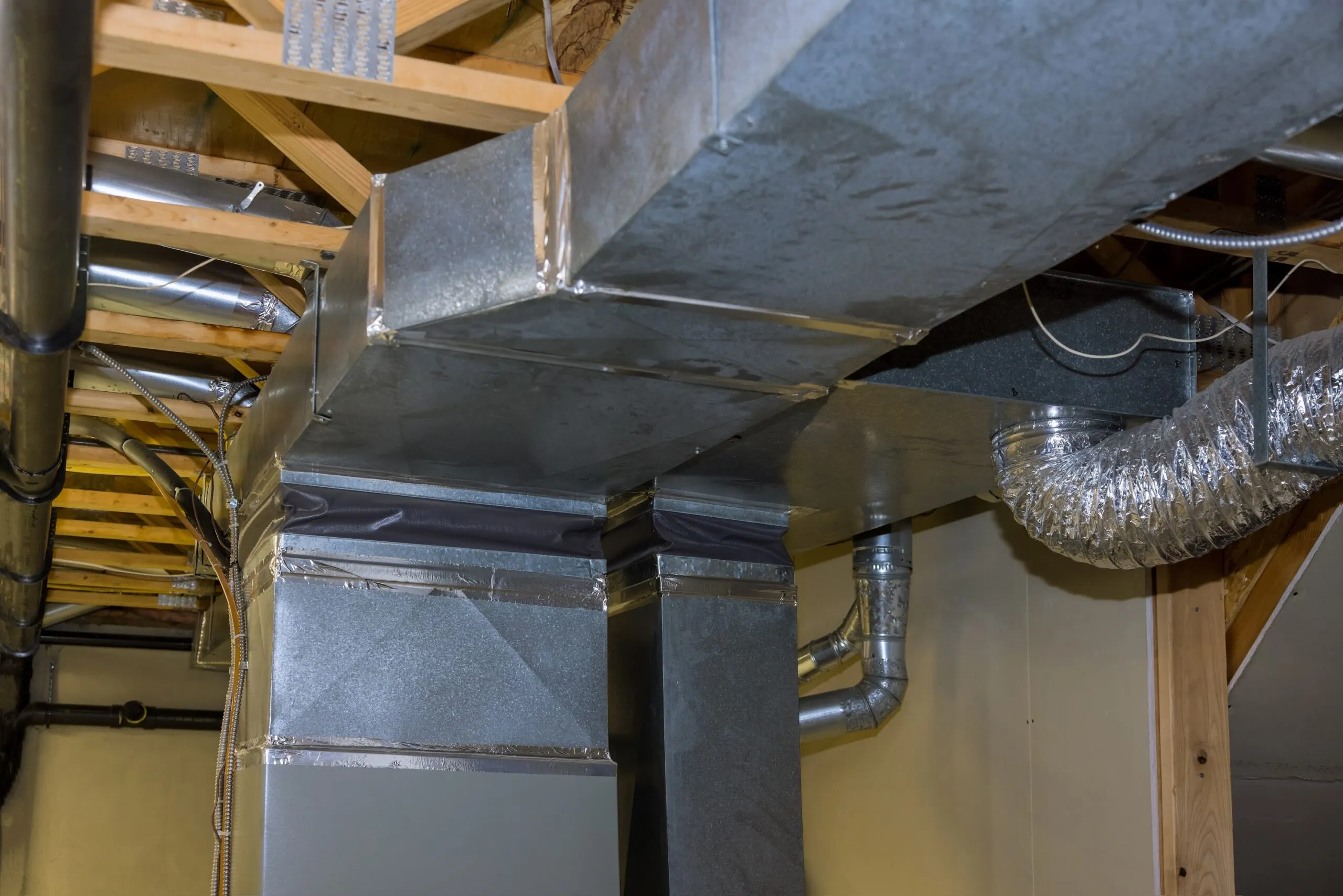
When you think about home heating and cooling, the furnace and AC probably come to mind first. While essential, this equipment can only perform as well as the duct system that distributes conditioned air. Your ductwork is your HVAC’s circulatory system, and its condition significantly impacts your comfort, energy bills, and air quality.
The design, sizing, sealing, and insulation of your ducts are critical factors. In San Antonio, where a reliable AC is non-negotiable, an inefficient duct system can undermine even the best equipment. Understanding your ductwork’s role is the first step toward achieving consistent comfort and lower energy costs.
How Ductwork Moves Air Through Your Home
To understand its impact, it helps to know how ductwork functions. Your HVAC system uses a network of tubes to move air. Supply ducts carry conditioned air from your furnace or air handler to each room, delivering it through registers. Return ducts pull air from your living spaces back to the HVAC unit to be reconditioned.
This creates a continuous loop that requires balanced airflow. If there isn’t enough return air, the system can be starved for air, straining components and reducing performance. On the other hand, if supply ducts are leaky or improperly sized, the conditioned air you’ve paid for may never reach its destination. Even a top-of-the-line HVAC unit can’t overcome the limits of a poorly designed or damaged duct system.
Signs Your Ductwork Is Hurting Home Comfort
Ductwork problems often create comfort issues that homeowners mistakenly blame on the AC or furnace. If your air distribution system is compromised, you might notice several frustrating symptoms.
- Uneven temperatures between rooms
- Weak or low airflow from vents
- Whistling or rattling noises from vents
- Excessive dust in your home
- HVAC system running constantly
- Rooms that never feel comfortable
These symptoms can also have other causes, such as an HVAC unit issue or poor insulation. A proper diagnosis from a qualified NATE-certified technician is necessary to pinpoint the exact source of the problem.
Leaky Ducts Waste Conditioned Air
One of the most common and costly ductwork issues is leakage. Over time, joints and seals can degrade, creating gaps, cracks, or disconnections. When this happens, conditioned air escapes into unconditioned spaces like your attic, crawl space, or garage.
In a San Antonio summer, this means expensive, chilled air is lost before it cools your living space. Your air conditioner is forced to run longer and work harder to meet the thermostat setting, driving up your energy use. Leaky return ducts can also pull hot, humid, and dusty air into your HVAC system, degrading your indoor air quality.
What Happens When Ducts Are Too Small or Poorly Designed?
Beyond leaks, the design and size of your ductwork are crucial for HVAC performance. If ducts are too small for the required air volume, it creates high static pressure. This forces the system to strain, leading to noisy operation, reduced efficiency, and premature wear on the blower motor.
Other design flaws also cause trouble. An inadequate number of return air vents can starve the system, while too many sharp bends or long, uninsulated runs can restrict airflow and cause temperature loss. These issues create pressure imbalances, hot and cold spots, and an overworked HVAC system.
Ductwork and Indoor Air Quality
Your duct system is also a major factor in your home’s indoor air quality. Damaged or poorly sealed ducts can introduce contaminants like dust, insulation fibers, and pollen into the air you breathe. This contaminated air is then circulated throughout your home.
While duct cleaning is an option, it’s not the whole story. Sealing leaks is a more effective way to prevent contaminants from entering the system in the first place. Combined with proper air filtration, sealed ducts can significantly improve your home’s air. Fixing the source of the problem is always the most important step.
Should Ductwork Be Evaluated Before HVAC Replacement?
Absolutely. It is a critical mistake to invest in a new, high-efficiency air conditioner or heating system without first assessing the ductwork. A new unit must be matched to the distribution system to perform as designed.
A professional evaluation should include airflow testing, verifying correct duct sizing, checking return air capacity, and identifying any leaks or insulation issues. Installing a powerful new unit onto a faulty duct system is a recipe for disappointment. You may spend thousands on new equipment only to find that your comfort issues and high energy bills remain. A comprehensive approach that evaluates both the equipment and the ductwork ensures your investment delivers the performance you expect.
Repair, Seal, or Replace? Choosing the Right Ductwork Solution
The right solution for your ductwork depends on the problems identified during an inspection. Minor issues, like accessible leaks or a disconnected section, can often be fixed with professional sealing or targeted repairs. This is a cost-effective way to improve efficiency.
However, significant problems may require a more extensive approach. If your home has widespread deterioration, flawed sizing, or a poor layout, modification or a full replacement may be the best long-term solution. Our team can perform a thorough evaluation of your HVAC ductwork and provide honest recommendations for your home and budget.
Your home’s ductwork is essential to your comfort and energy efficiency. At Rosenberg Plumbing & Air, our family-owned business has helped homeowners with a total-system approach to HVAC performance since 2003. Our NATE-certified technicians understand how to diagnose and resolve complex comfort issues.
If you’re struggling with high bills or inconsistent temperatures, let us evaluate your entire system. For a comprehensive ductwork and HVAC assessment in San Antonio, TX, contact the experts at Rosenberg Plumbing & Air today, and see why we are a trusted name across our service area.
Ductwork and HVAC Performance FAQs
Homeowners often have questions about how their duct systems function and affect their daily comfort. Here are answers to a few common inquiries we receive.